
A comprehensive guide to cybersecurity fundamentals, threat prevention, incident response, and compliance for Arizona’s small and medium businesses.

A comprehensive guide to cybersecurity fundamentals, threat prevention, incident response, and compliance — built for Arizona’s small and medium businesses.
Cyber threats targeting small and medium businesses have increased dramatically. In 2025, 43% of cyberattacks targeted small businesses, yet only 14% were prepared to defend themselves. Here are the threats every Arizona business owner needs to understand:
Ransomware encrypts your files and demands payment for their return. The average ransom demand for small businesses exceeded $150,000 in 2025, and paying the ransom doesn’t guarantee data recovery. Prevention through regular backups, endpoint protection, and employee training is your best defense.
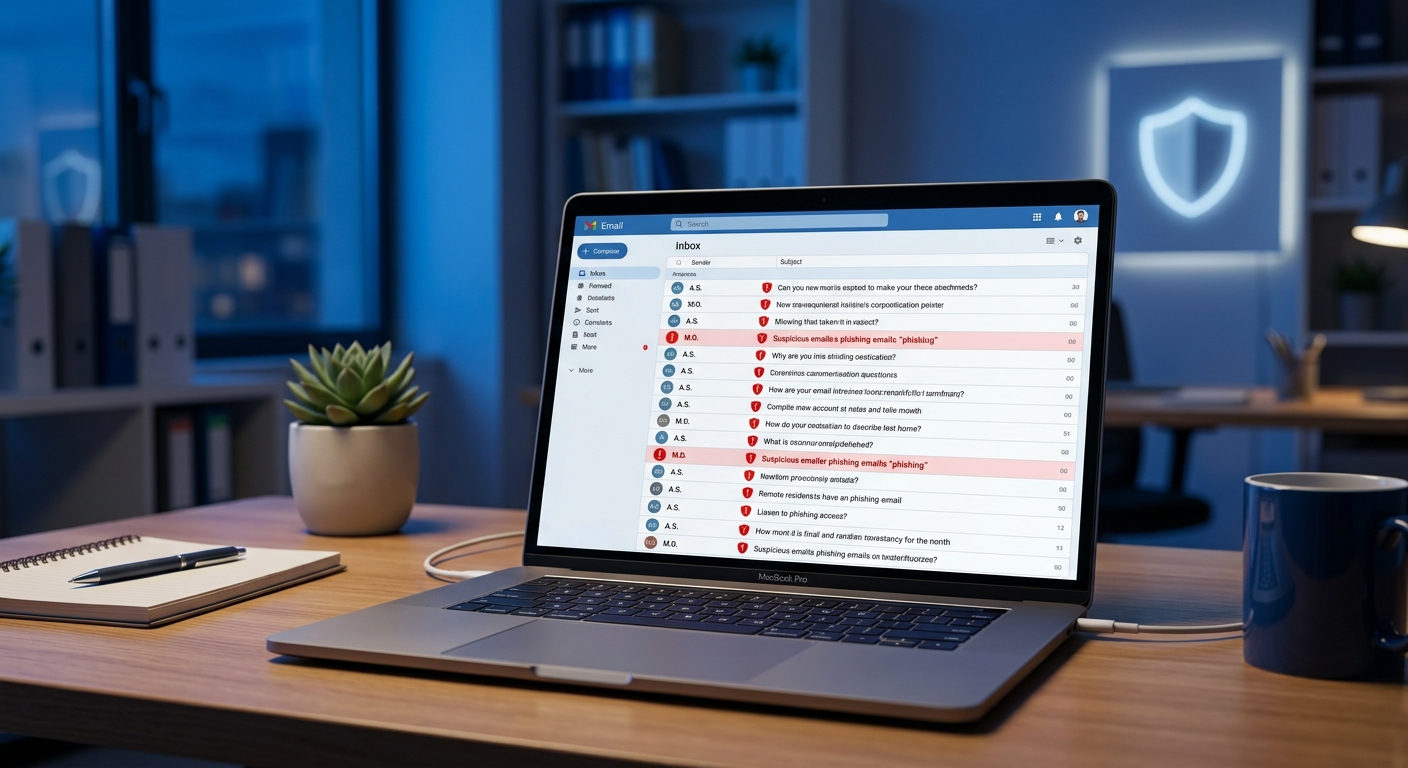
Phishing remains the number one attack vector. Business email compromise attacks trick employees into wiring funds or sharing credentials by impersonating executives or vendors. These attacks cost businesses $2.7 billion annually and are increasingly sophisticated with AI-generated content.
Key Insight: The average cost of a data breach for small businesses reached $3.31 million in 2025. Investing in prevention — including employee training, endpoint protection, and incident response planning — costs a fraction of recovering from an attack.

90% of data breaches involve human error. Security awareness training transforms your employees from your weakest link into your strongest defense. An effective program includes regular phishing simulations, password hygiene training, social engineering recognition, and building a culture where reporting suspicious activity is encouraged rather than punished.
Enterprise email protection requires a multi-layered approach. This includes advanced threat filtering, proper DMARC/DKIM/SPF configuration to prevent domain spoofing, multi-factor authentication on all email accounts, and clear policies for verifying financial requests through secondary channels.
Every business needs a robust backup and disaster recovery strategy. The 3-2-1 rule is your foundation: maintain 3 copies of your data, on 2 different types of media, with 1 copy stored offsite or in the cloud. Beyond backups, your disaster recovery plan should define recovery time objectives (RTO), recovery point objectives (RPO), and be tested at least quarterly.
Pro Tip: Follow the 3-2-1 backup rule — 3 copies of your data, on 2 different media types, with 1 stored offsite. Test your backups quarterly to ensure they actually work when you need them.
Traditional antivirus is no longer sufficient against modern threats. Managed Detection and Response combines advanced AI-powered threat detection with human security analysts who monitor your systems around the clock. When a threat is detected, the MDR team responds immediately — isolating affected systems, containing the threat, and remediating the damage — often before your business is impacted.
For SMBs that can’t justify a full in-house security operations center, MDR provides enterprise-grade protection at a fraction of the cost.

.svg)





.svg)
